
Cross-Chain Bridges: Exclusive Best Practices & Risks
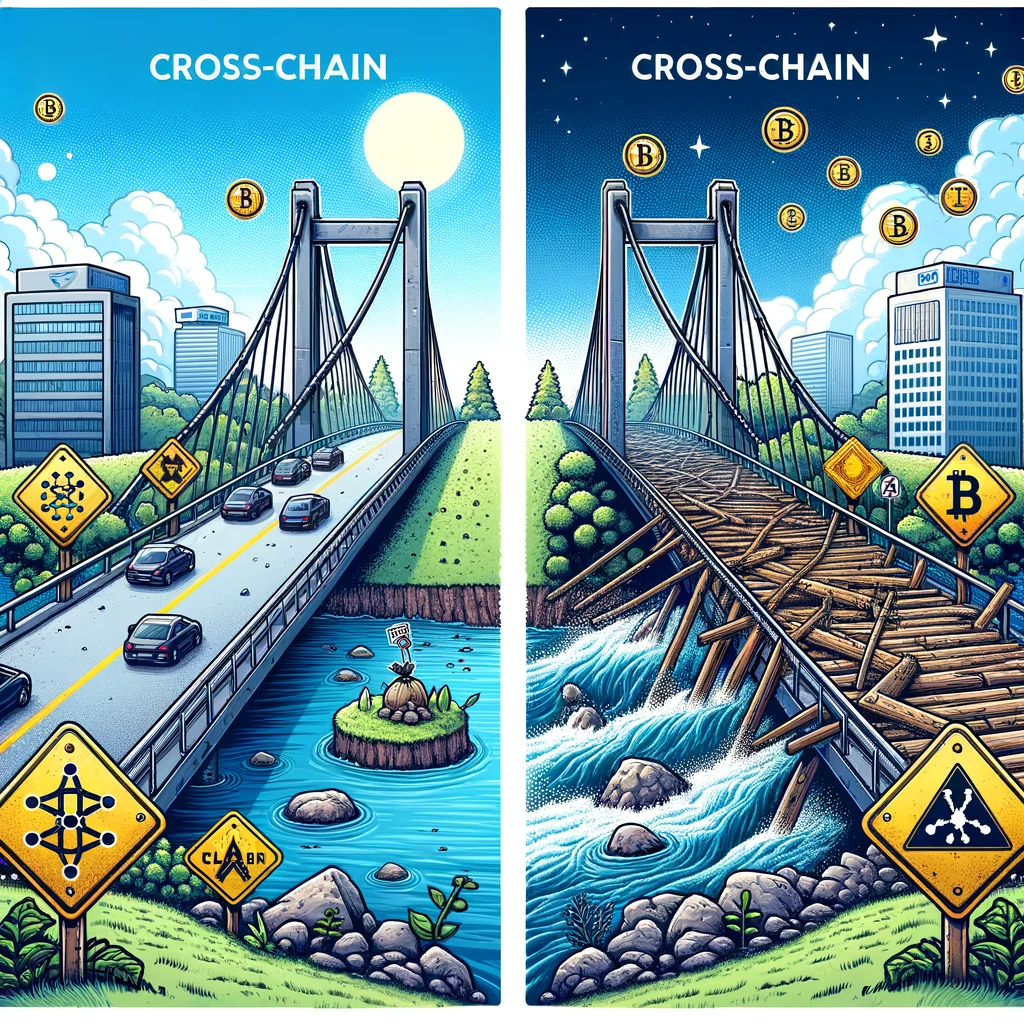
Cross-chain bridges move value and messages across blockchains. They solve fragmentation but introduce fresh attack surfaces. Good hygiene reduces loss, yet design choices matter even more.
How Bridges Actually Move Value
Most bridges do not “send” tokens across chains. They lock assets on Chain A and mint a representation on Chain B. Later, they burn and unlock. Some bridges use liquidity pools and swap across inventories. Others pass messages to call contracts on the destination chain.
Picture a user who wraps ETH on Chain A and receives wETH on Chain B. The value holds only if the lock on Chain A is safe and the minting logic is sound. If either breaks, the wrapped token breaks too.
Core Risks You Should Not Ignore
Bridge risk clusters around validation, liquidity, and code quality. Each category has known failure modes that repeat across incidents.
Validation and Trust Assumptions
Multi-sig bridges rely on a few keys. If keys collude or get phished, funds can be drained. Light-client bridges rely on cryptographic proofs and are safer if implemented correctly but are complex and heavy on gas.
Smart Contract Bugs
Incorrect message verification, replay issues, and integer errors can let attackers mint unbacked tokens. A single check in the wrong place can break the peg.
Liquidity and Peg Stability
Pool-based bridges can de-peg if large withdrawals hit thin liquidity. Users may receive less than expected during stress. Low-fee promotions can worsen drains.
Operational and Key Management
Hot wallet keys, unsecured signing endpoints, and opaque rotations put the system at risk. Attackers often look for the ops weak link, not the code path.
Common Attack Patterns Seen in the Wild
Most high-profile bridge failures rhyme. Study these patterns and you will spot red flags faster.
- Forged message acceptance due to missing domain separators.
- Replay of old proofs across similar chains with shared IDs.
- Compromised validator keys signing fraudulent releases.
- Price or oracle desync leading to pool mispricing and drains.
- Misconfigured pausing logic that fails under partial outages.
A tiny scenario: an attacker reuses a message intended for Testnet because the production contract reuses the same chain ID. One copy-paste mistake, millions gone.
Best Practices for Everyday Users
You can cut risk with simple habits. Follow the order below when moving size.
- Check the bridge’s security page and last audit date before use.
- Start with a small test transfer to confirm route, fees, and timing.
- Verify the destination token contract address on a block explorer.
- Prefer routes with on-chain light clients when fees and time allow.
- Avoid large transfers during network congestion or major events.
- Split big moves into chunks across time or different routes.
- Monitor the official status page and social feeds for incidents.
- Keep enough native gas tokens on both chains for retries.
If a transfer stalls, do not spam retries. Check the transaction hash, confirm finality on the source chain, and contact the bridge support with details. Rash retries often add fees and noise.
Builder Playbook: Ship Safer Bridges
Engineering choices decide the blast radius. Aim for cryptographic verification and hard limits that degrade safely under stress.
- Use unique domain separators and chain IDs in every message.
- Implement nonces and replay protection with strict ordering.
- Adopt rate limits, withdrawal caps, and circuit breakers per asset.
- Separate hot keys from governance; require hardware-backed signers.
- Publish a real-time status page, including validator health and TVL.
- Run continuous fuzzing and invariant tests across message flows.
- Stage deployments with timelocks and canary limits before full scale.
- Offer a live bug bounty with clear scope and fast triage rules.
Two micro-examples help here. First, add a per-epoch withdrawal ceiling so an attacker cannot drain the full pool in one shot. Second, enforce a minimum confirmation window so short reorgs cannot trick light clients.
Bridge Models at a Glance
Different designs trade speed, cost, and trust. The table below summarizes the main options with practical notes.
| Model | How It Works | Main Risk | Good For | Watch Out For |
|---|---|---|---|---|
| Multi-sig Custody | Signers approve releases | Key compromise/collusion | Fast transfers, low cost | Opaque operations, signer churn |
| Light-Client Verified | On-chain proof checks | Implementation bugs | High security routes | Gas costs, longer latency |
| Liquidity Network | Pool-based swaps | De-peg and slippage | Speed during peak load | Inventory imbalance |
| Rollup Native Bridges | Protocol-level escape hatches | L2 proof delays | Canonical asset movement | Withdrawal waiting periods |
Pick the route with the smallest trust jump for your case. For treasury moves, pay for light-client assurance. For small consumer transfers, a well-audited pool route can be fine.
Operational Hygiene Checklist
Teams reduce risk by treating bridges as critical infrastructure. The points below cover daily discipline.
- Rotate signer keys on a set schedule with public attestations.
- Segment infrastructure; isolate relayers, signers, and dashboards.
- Enforce MFA and phishing-resistant keys for admins.
- Log every release with immutable proofs and store off-chain backups.
- Simulate failover; rehearse pause and unpause under load.
- Pin versions; require two-person reviews for config changes.
A quarterly chaos test reveals silent failures before attackers do. Make the pause switch boring and reliable.
Incident Readiness and User Communication
Fast, clear communication limits damage. Users forgive delays more than silence.
- Define severity levels and auto-pause triggers in code and docs.
- Publish a public incident log with timestamps and on-chain links.
- Offer a claims process with clear eligibility and deadlines.
- Coordinate with major wallets and explorers for warnings.
- Resume in phases with raised limits and extra monitoring.
During an exploit, freeze minting first, then investigate proofs, then reopen with tight caps. Sequence matters under pressure.
Compliance and UX Notes
Some regions treat bridges like money transmitters. Teams should know local rules and KYC triggers for fiat ramps attached to bridge flows. UX also shapes risk. Clear fee previews, ETA ranges, and explorer links reduce user errors.
If your app auto-selects routes, show the trust model for each option. A short label like “Light-client verified” or “Custodial multisig” sets expectations.
Quick Red Flags Before You Bridge
Two minutes of checks can save a portfolio. Scan for the following issues and pick another route if any appear.
- No recent audits or vague security claims.
- Closed-source contracts or unverifiable proxies.
- Missing pause mechanics or undefined incident policy.
- TVL concentration in a single asset with thin liquidity.
- Anonymous operators holding all signer keys.
If three or more flags appear, step back. Wait for clarity, or use a canonical bridge even if it costs more.
Final Notes
Bridges are powerful and risky. Choose designs with sound verification, slow down large moves, and demand transparency from operators. Small habits compound into real protection.